
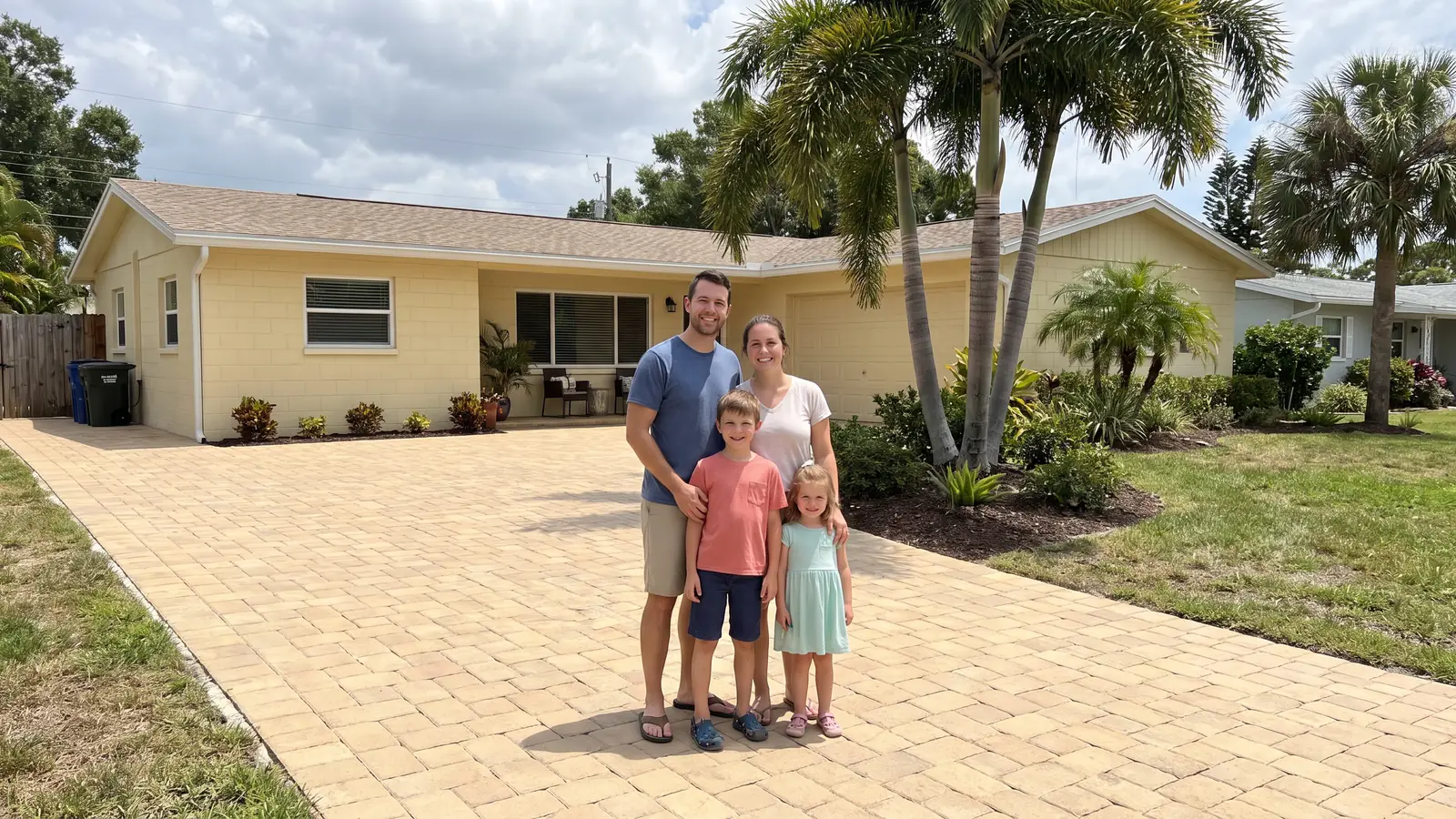
A cleaner, grippier deck around your Sandalwood pool
Pool Deck Paver Sealing in Sandalwood, FL
Call (904) 541-9860 to book a free pool deck paver sealing estimate in Sandalwood.
- Brings out deeper paver color
- Fresh joint sand helps lock pavers in place
- Gives weeds less room to grow
- Makes the surface easier to keep clean
- Free estimate, no obligation
Request a Free Estimate
Free, no obligation.
Do you seal pool deck pavers in Sandalwood, and how soon will I hear back?
Pool deck paver sealing in Sandalwood, FL is a local job, and a contractor who works your side of Jacksonville will answer your request within 1 business day, often much sooner. The estimate costs nothing and booking is your call. A contractor looks at the deck, names the sealer and writes the price down before anything starts. To get started, call (904) 541-9860.
Picture the deck at the end of August, with a gray-green film in the corners and bare feet picking up grit. A wash, fresh joint sand and a thin coat of the right sealer can bring the color back and leave a surface that rinses clean, with the coping and waterline kept clear. Mention how the deck gets used, then get a free estimate.
What makes a Sandalwood pool deck wear faster than a driveway?
A deck gets water on it nearly every day, from splash, drips and rain. Four things work on it at once, and each one changes the plan. To talk through which apply to yours, call (904) 541-9860.
Does chlorine shorten the life of the sealer?
It can. Safe Touch, a Jacksonville washing company, lists pool chlorine along with full sun and summer storms as reasons a coat may last about two years instead of two to three. If you are unsure, get a free estimate.
What does a salt system do to pavers?
CMHA says salt staining is largely cosmetic and looks like efflorescence. A rinse with warm fresh water takes the deposits off, and they do not mean the paver is damaged. The same article says acid spills hurt pavers far more than salt does. If you have a salt system, say so when you call (904) 541-9860.
How hot do pavers get in a Sandalwood summer?
Weatherspark puts the hot season at May 21 through September 20, with average highs above 85 degrees and July at 90. Concrete Network warns that dark pavers absorb more heat, and says joints hold moisture that helps cool the surface. To compare finishes, get a free estimate.
Why does the deck stay green in August?
Weatherspark calls August muggy 99 percent of the time, and the wet season runs June 2 to September 27. Damp shade is where algae grows, and a pool cage often makes shade. Washing clears it, and a coat makes the next rinse go faster. To hear how a contractor handles it, call (904) 541-9860.
Should the pavers around my pool be sealed at all?
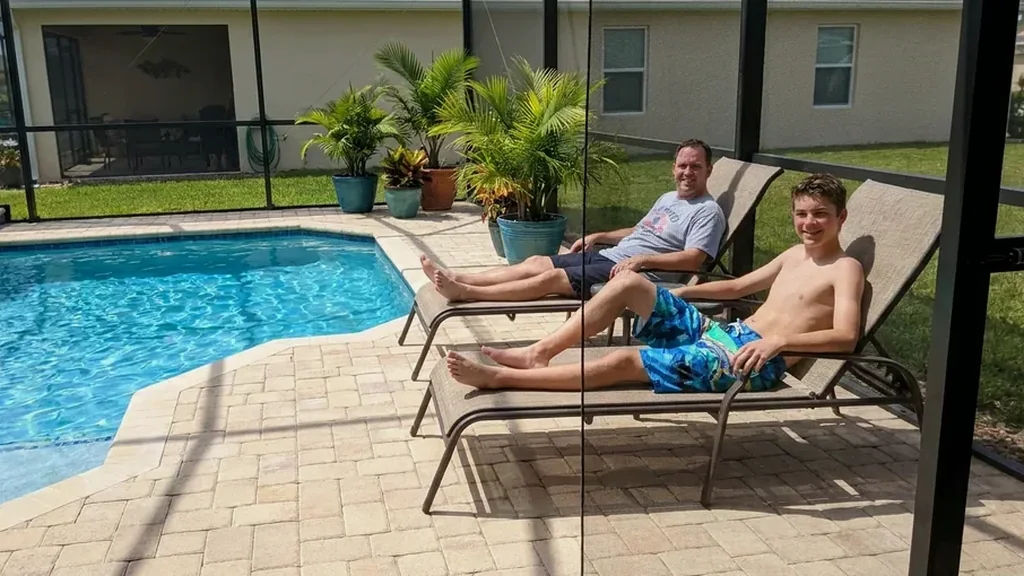
Not every deck needs it, and a contractor should say so plainly. A sealer helps most when pavers have faded, joints keep emptying or algae returns every summer. If the pavers still bead water and the sand is full, waiting is fine. To get a straight opinion, get a free estimate.
What does sealer do for a deck?
CMHA says a sealer can enhance the color of the pavers and make surface stains easier to remove. Concrete Network adds that a UV-resistant sealer resists fading and that dense pavers protected by sealer resist algae and mildew. To see what it would do on yours, call (904) 541-9860.
Is a bright, glossy finish a better shield?
Not necessarily. Lurveys says a glossy sealer is not automatically more protective than a natural-look one, and penetrating products work below the surface while film-forming ones leave a visible layer. Ask which product goes on when you get a free estimate.
How do I keep a sealed pool deck from turning slick?
Finish and thickness decide it. HydroSeal says slippery pool decks are almost always caused by the wrong finish or over-application, and it keeps wet-look buildup off walking areas. Jax Exterior Cleaning says a pool-suitable sealer should not turn slippery when wet. To ask about traction, call (904) 541-9860.
Penetrating or water-based: which suits a pool deck?
HydroSeal says most pool decks suit a penetrating sealer or a high quality water-based one, with solvent-based used on some concrete pavers for richer color. Ask for the product name when you get a free estimate.
Do beveled edges and texture change the answer?
Yes. Concrete Network recommends beveled edges to cut tripping hazards, and texture gives wet feet more grip than a smooth face. A thin coat should leave the texture showing. If your pavers are smooth, say so at (904) 541-9860.
Who decides the sheen in a neighborhood with an HOA?
The association may. A Jacksonville company says natural-look sealers are more likely treated as maintenance, while color-enhancing or high-gloss finishes more often need approval. Check your rules first, then get a free estimate.
What is the pool deck paver sealing process?
The steps run in a fixed order, and skipping one is how decks end up cloudy. Most jobs follow the six below, which match what HydroSeal and Jax Exterior Cleaning list. To go over the steps for your deck, call (904) 541-9860.
1. Walk the deck
The contractor looks for cracked or sunken pavers, empty joints, old sealer, efflorescence and places where water stands, then measures for the quote.
2. Cover the pool edge
Coping and waterlines are protected from overspray, and rinse water is managed so it does not run where it should not.
3. Clean and treat
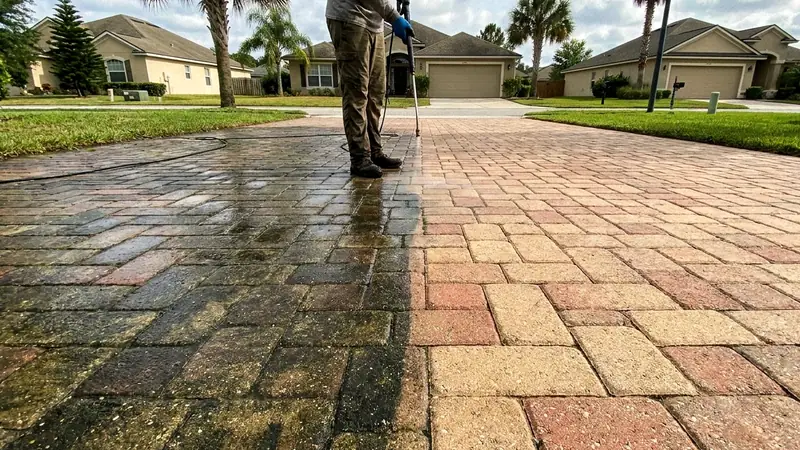
The deck is washed, algae and efflorescence are treated, and a coat that has already failed comes off before a new one goes on.
4. Dry it out
The deck has to be dry through, not only on top. Unilock says shaded spots can need about 24 hours after cleaning, against a few hours in warm sun.
5. Refill the joints
HydroSeal uses kiln-dried ASTM C144 joint sand, swept in after the deck is dry, so the joints are full before any coat goes down.
6. Seal and cure
Thin, controlled coats go on in one continuous session. Feet return after about 24 hours, HydroSeal says.
How long before the pool is open again?
Plan on about a day for feet and one to two days for the pool, with humid weather adding time. HydroSeal says normal pool use returns in 24 to 48 hours and sometimes longer when it is humid. Rushing the cure is a top cause of failure, it adds. To set the schedule around a party, call (904) 541-9860.
Does a screened pool cage slow the drying?
It can. HydroSeal says screened pool decks often take longer to cure. Air moves less under a cage, and Ask about a rainy week when you get a free estimate.
Do the sprinklers matter?
Yes. Unilock says to turn automatic sprinklers off near the pavers while sealer cures, because water can leave white marks and get trapped. UF/IFAS Duval County says a broken head makes a geyser, and it suggests running cycles between 2 and 8 a.m. Call (904) 541-9860 after checking the heads.
What does pool deck paver sealing cost in Sandalwood?
No page gives one price for a Sandalwood pool deck, so the table below is built from published pieces. For the full job, Safe Touch lists $1.75 to $3.25 per square foot around Jacksonville, and HydroSeal says pool deck sealing starts at $1.50 a square foot. To get a written number, get a free estimate.
Size, the condition of the joints and any old sealer that needs stripping move the figure most. A deck with empty joints is a two day job, Safe Touch says. Call (904) 541-9860 if a bid lands far outside the rows below.
| Deck area | Typical example | Full clean, sand and seal | Seal only, from $1.50 |
|---|---|---|---|
| 300 sq ft | Small lanai deck | $525 to $975 | from $450 |
| 500 sq ft | Deck around a standard pool | $875 to $1,625 | from $750 |
| 800 sq ft | Deck with a wide lanai | $1,400 to $2,600 | from $1,200 |
| 1,200 sq ft | Deck around a pool and spa | $2,100 to $3,900 | from $1,800 |
The third column multiplies the $1.75 to $3.25 per square foot that Safe Touch published, and the fourth uses the $1.50 starting rate HydroSeal lists, both read in November 2026. Treatment of efflorescence, stripping and repairs usually cost extra, and your own quote may land elsewhere.
When is the right season to seal a Sandalwood pool deck?
Pick a stretch of dry weather and a surface that has had time to dry. Unilock aims for 50 to 90 degrees with 75 the sweet spot, clear skies for 24 to 48 hours before and up to 48 hours of dry weather after. Weatherspark says the clearer skies run from September 21 to June 6. To find an open day, call (904) 541-9860.
Is fall the quiet window?
Safe Touch describes fall as usually drier before winter, and Weatherspark lists November as the driest month at 1.9 inches, against 5.0 in September. Late October and November fit a pool deck. Book early at (904) 541-9860.
What if the deck is brand new?
Wait. Unilock says new pavers should sit 60 to 90 days, and Jax Exterior Cleaning says 90, so efflorescence can clear. Lurveys adds that sealing over efflorescence traps it. Give the install month to the contractor when you get a free estimate.
What do owners of 1970s and 2000s pool homes in Sandalwood face?
NeighborhoodScout says Sandalwood is mostly single family homes with three to five bedrooms, many built in 2000 or later and a number built between 1970 and 1999. That means pool decks of different ages. To tell the contractor which one you have, call (904) 541-9860.
What about decks that were never sealed?
Older decks may carry years of algae and lost sand, so the first visit tends to be longer. Concrete Network says polymer-additive sand usually avoids refilling for about 2 to 3 years. To find out, get a free estimate.
What about decks on newer homes?
A deck on a home built after 2000 may still be on its first coat, or on none, and may be old enough to have lost the original sealer. If drops soak in, call (904) 541-9860.
Which signs say my pool deck needs attention?
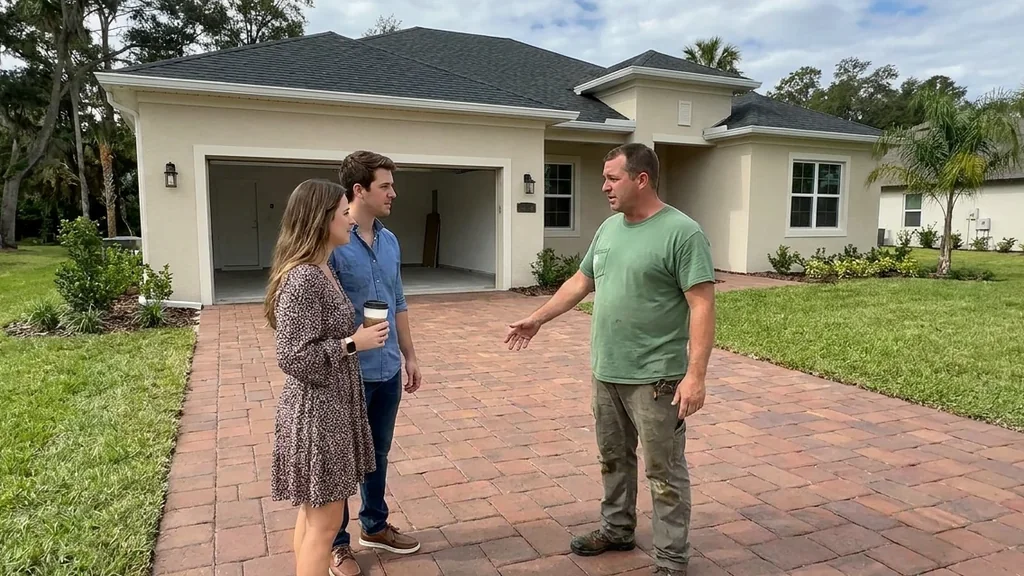
Five signs show up most. To have a contractor confirm what you see, get a free estimate.
Color gone flat
The deck looks chalky next to a spot that stays shaded, such as under a planter or a chair.
Water soaks in
Drops sink into the surface instead of beading, which means the coat is thin or gone.
Green or black film
Shady corners near the cage and the pump equipment grow algae first.
Orange streaks
Iron-rich irrigation water leaves rust, as a Jacksonville company notes, and rust gets its own treatment.
Low joints and weeds
Sand has washed down below the paver edges, and weeds have found the gaps.
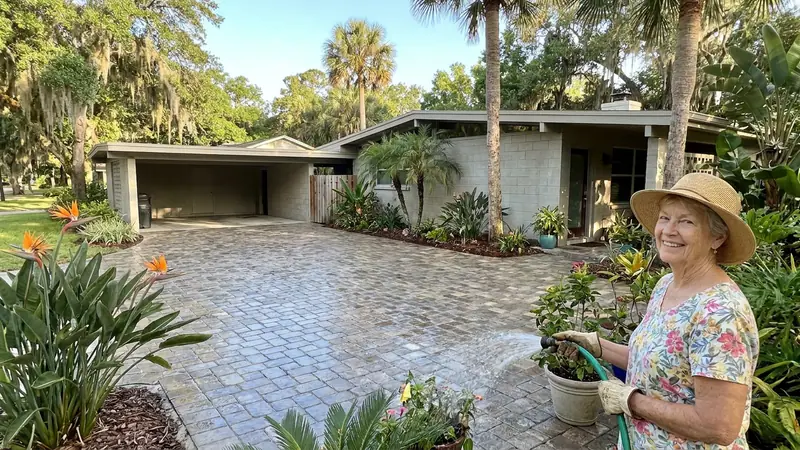
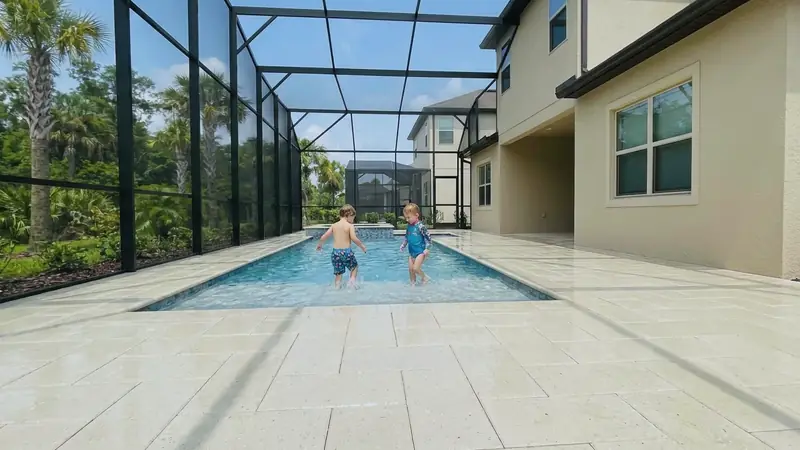
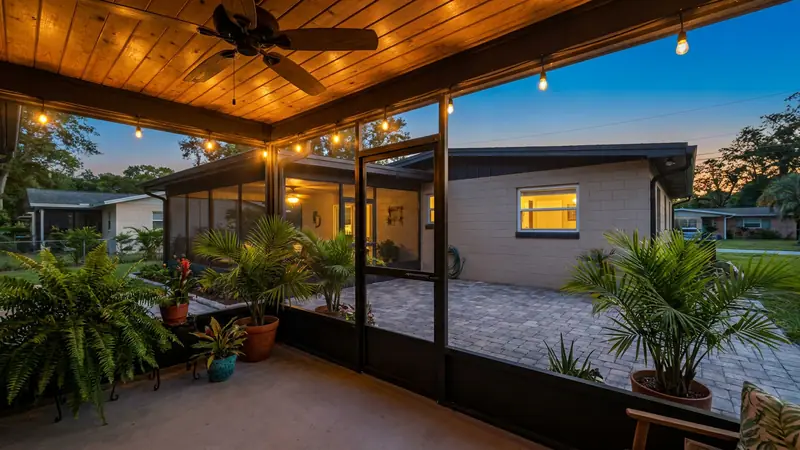
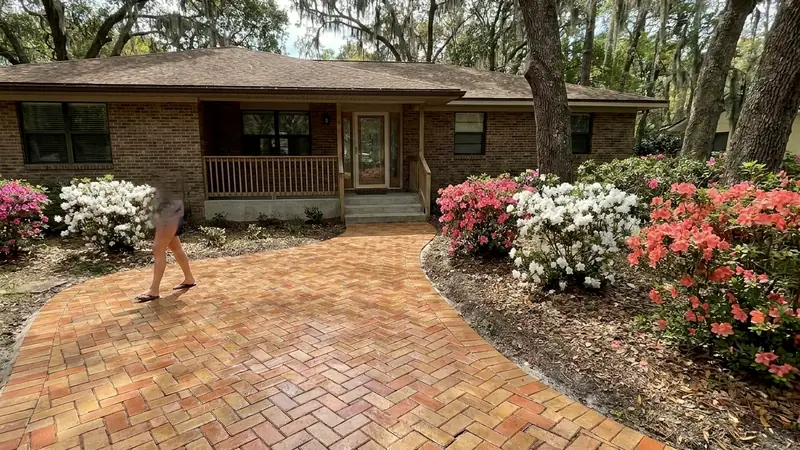
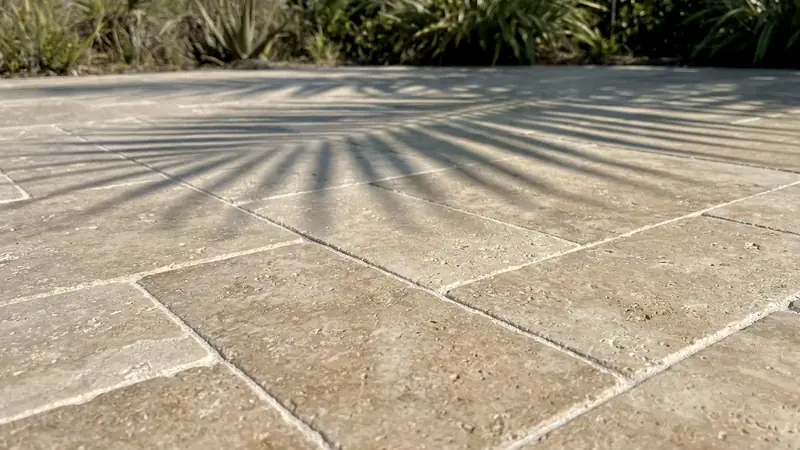
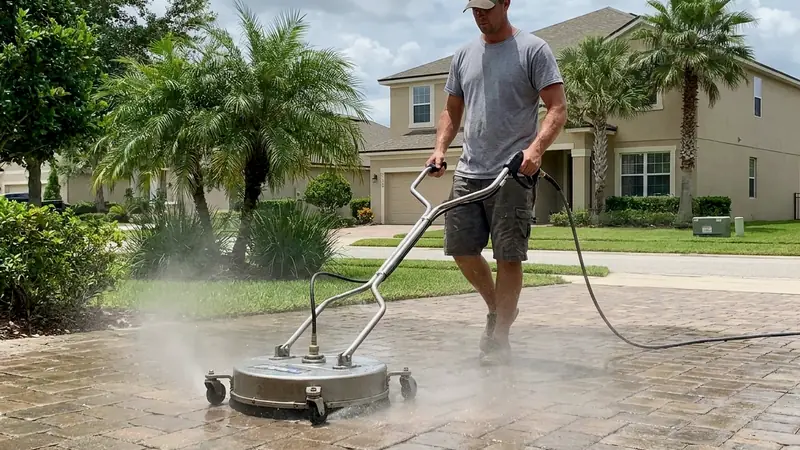
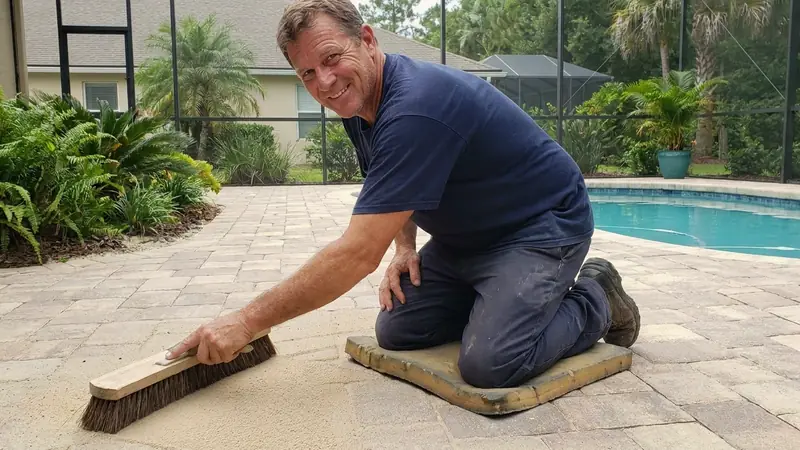
What do sealed pool decks look like around Sandalwood lanais?
Questions Sandalwood pool owners ask about deck sealing
Should pool deck pavers be sealed?
Often, yes, and color and cleanup are the usual reasons. CMHA, a masonry and hardscape association, says a sealer can enhance the color of pavers and make surface stains easier to remove. A deck that stays wet and shaded gets the most from it. To see if yours is ready, get a free estimate.
What is the average cost to seal pavers in Florida?
A Jacksonville washing company publishes $1.75 to $3.25 a square foot to clean, sand and seal. A pool deck contractor in town says sealing alone starts at $1.50 a square foot. On a 500 square foot deck that is roughly $750 to $1,625 depending on the scope. For a number on your own deck, call (904) 541-9860.
How much does it cost to have your pavers sealed?
It depends on size and condition more than anything else. Empty joints, algae and an old failed coat all add work, and Safe Touch says a failed coat is stripped first. Ask for the wash, the sand and the sealer to be listed as separate lines when you get a free estimate.
How much does it cost to seal outdoor pavers?
Sealer itself runs $80 to $150 a gallon, according to Unilock, and a gallon covers about 80 to 150 square feet. Labor and prep are the bigger part of the bill. A deck of 800 square feet needs roughly 5 to 10 gallons for one coat. To price your own, call (904) 541-9860.
How long do paver sealers last?
Two to five years is the span the sources give. Unilock says reseal every 3 to 5 years, and Safe Touch says full sun and pool chlorine can cut a Jacksonville coat to about two. Check how splash water behaves on the deck, then call (904) 541-9860 if it soaks in.
Do I need to seal pavers in Florida?
No, it is optional, but Sandalwood's humid summers make a sealed deck easier to rinse and keep clear of algae. Unsealed pavers still work fine. Lurveys, a hardscape supplier, says there is no universal schedule, so let the deck's own condition decide. For a quick opinion, get a free estimate.
Can I clean sand and seal my pavers?
Yes, and a pool deck often needs all three. The order matters: wash, let the deck dry, fill the joints, then seal. HydroSeal says it confirms the surface is dry first so no moisture gets trapped. To book the whole job, call (904) 541-9860.
Why is paver sealing so expensive?
Because the work is mostly preparation. HydroSeal lists a deep clean, efflorescence treatment, new joint sand, a dry surface check and controlled coats, with overspray kept off the coping and waterline. Safe Touch calls it a two day job when joints are empty. Ask what each step includes when you get a free estimate.
Will sealing make my pool deck slippery?
It does not have to. HydroSeal says slippery decks are almost always caused by the wrong finish or too much product. A penetrating or water-based product in a thin coat keeps the surface from turning glossy. Tell the contractor about bare feet and kids when you call (904) 541-9860.
Does salt from a saltwater pool ruin pavers?
Mostly it looks bad rather than does harm. CMHA calls salt staining largely cosmetic, says it resembles efflorescence and says a warm fresh water rinse removes it. Acid spills are the real danger, it adds. Mention a salt system when you get a free estimate.
How long should I stay off a newly sealed pool deck?
Foot traffic is usually fine after about 24 hours, and normal pool use after 24 to 48 hours, according to HydroSeal, with humid weather and screened decks taking longer. Unilock asks for up to 48 hours of dry weather. Ask the contractor for a date at (904) 541-9860.
Can the pool coping and waterline be protected during sealing?
Yes. HydroSeal lists protecting the coping and waterlines from overspray and managing rinse water as part of the work. Ask how the pool gets covered and where wash water goes before you get a free estimate.
Where else does a local contractor seal pavers near Sandalwood?
Every neighborhood below has its own page with local notes. If your street is not listed, call (904) 541-9860.
Ready to get your pool deck estimate?
Call or send the short form, and a Sandalwood contractor replies within 1 business day, often much sooner.
Free, no obligation