
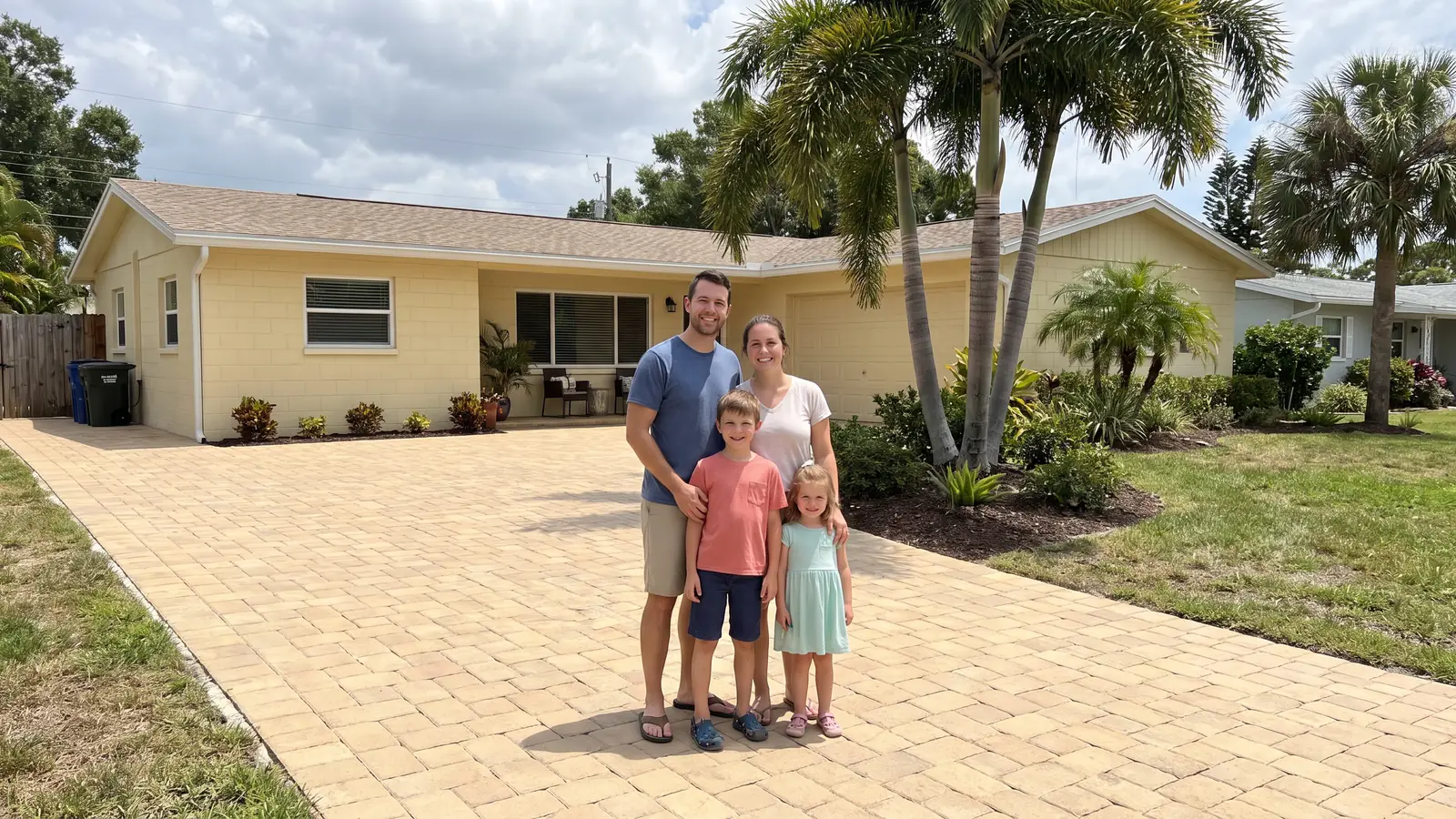
Paver sealing for Paxon homes
Paver Sealing in Paxon, FL
Paxon's name traces to a 1920s airfield, and faded pavers here can look new again, so call (904) 541-9860.
- Brings out deeper paver color
- Fresh joint sand helps lock pavers in place
- Gives weeds less room to grow
- Makes the surface easier to keep clean
- Free estimate, no obligation
Request a Free Estimate
Free, no obligation.
Fast, careful paver sealing in Paxon
Paxon homeowners can book paver sealing with a free estimate, from the Edgewood Avenue North corridor to the quiet side streets. A local contractor cleans, re-sands and seals driveways, walkways and patios. If you get a free estimate, an answer reaches you within 1 business day, usually much sooner.
Remember when the front walk looked crisp? Years of sun and rain leave pavers chalky and gap-toothed. A wash, new sand and a fresh coat tighten it all back up. Call (904) 541-9860 if you would rather talk first, and describe the walk as it looks today.
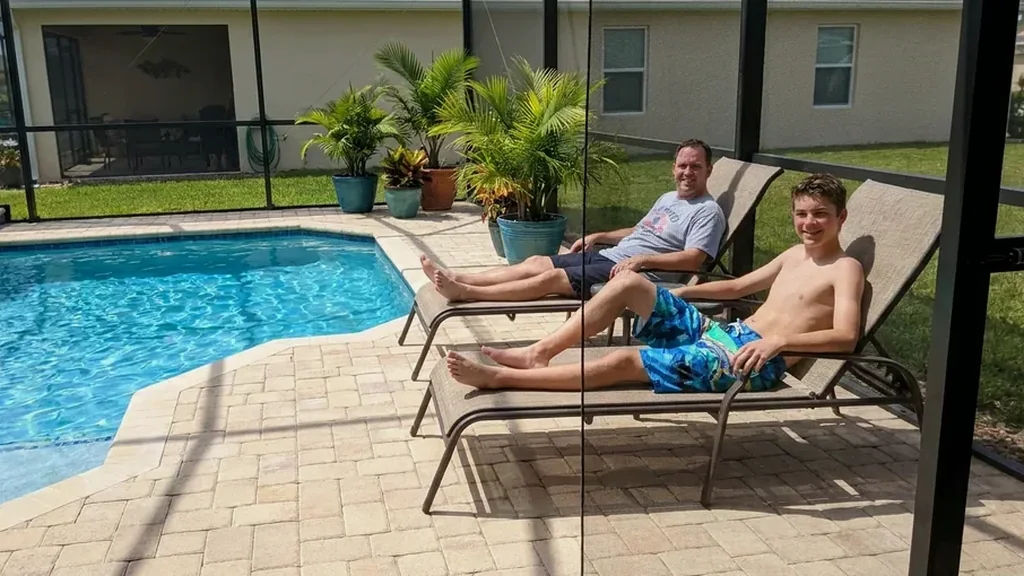
Why hire a local paver sealing contractor in Paxon?
Paxon homes are mostly mid-century, one-story houses, so the pavers are often smaller jobs with long histories and unknown past coats. To find out what that means for your yard, call (904) 541-9860.
Free look, plain price
A local contractor measures your Paxon drive, walk and patio and puts a clear price in front of you before anything else happens. You decide afterward. Asking costs nothing.
A range to measure bids by
See the pricing section below for the published per-square-foot range, then test every Paxon quote against it.
Sized for the house
The typical Paxon home is about 1,152 square feet, so many jobs are modest. You pay by the square foot, and you see the measured area written down.
Pick the look and the day
You set the look and the day. No Paxon quote obliges you to anything, and replies land within 1 business day, usually much sooner. Ask what finish suits a short, busy drive.
Get Your Free Estimate in Paxon
Tell us about your pavers in Paxon.
Free, no obligation
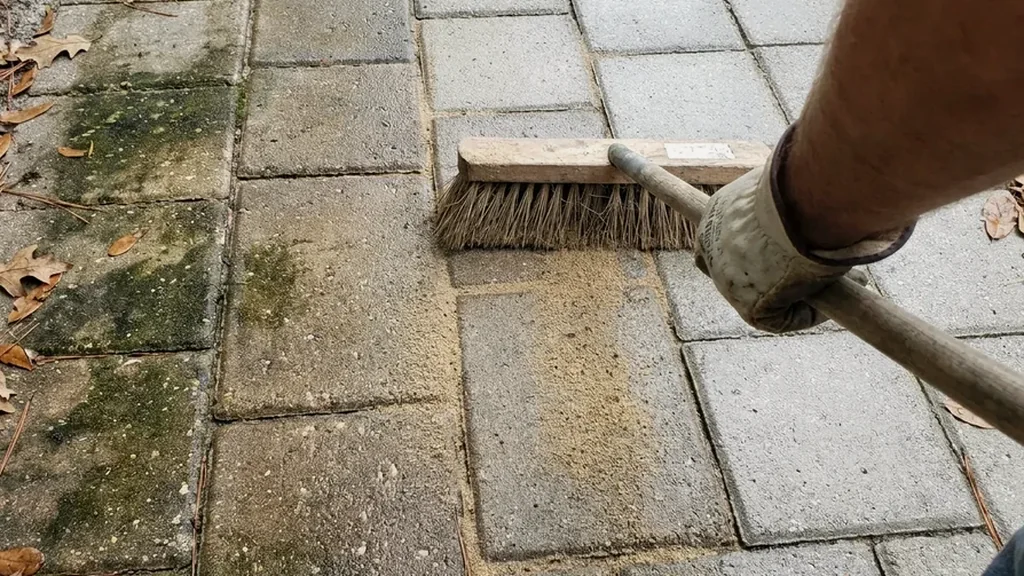
What paver problems show up most in Paxon?
Sun on the old color
A Jacksonville paver company says the sun fades unsealed concrete pavers noticeably within three to five years, and it calls sealer sunscreen for the pigment. A drive laid decades ago in a mid-century neighborhood may have lost much of its color. A wash shows what is left, and a fresh coat can bring it forward. Matte keeps the look natural, while a wet look deepens it. If your drive sits in full sun most of the day, expect the most fade there, and the least under a tree.
Old coats on mid-century lots
The median Paxon home was built in 1954, so a paver walk or drive was likely added years later. The owner who added it may have used any product, and nobody wrote it down. Once a solvent-based sealer is down, water-based sealer cannot go over it. The contractor works out what is on the surface before choosing what goes on next. Where the old coat is peeling or blotchy, the earlier product needs attention. Old receipts or a past owner's note can settle it fast. Realtor records list 361 Paxon sales since 2001, so many of these homes have had more than one owner and more than one idea about the walk. The median Paxon house is a one-story home, so a front walk is often the first thing a visitor sees.
Widened joints and weeds
Landscape Ontario says widened joints can come from poor edge restraint or loss of bedding or joint sand, and that a sealer on stabilized sand helps limit weeds. On an older Paxon drive, joints can open over the years, and weeds move in as they do. The contractor checks the edges, refills the sand and seals it in, so the repair lasts. Pulling weeds alone does not last, because the seed finds the same open joint again. Sealing over stable sand is what holds the line. Pulling weeds alone does not last, because the seed finds the same open joint again.
Lifted spots and dips
Per a Jacksonville sealing company, a coat holds a sunken or lifted section exactly as it is, and tree roots can lift sections. Older Paxon lots can have mature trees close to the drive, and roots keep growing for decades. A dip or raised edge is repaired first, so the coat does not lock it in. Point out any trip spot at the first visit. Repairs add time, so ask about them early. A small fix now costs less than resealing over a problem later. A low spot near the garage is the first place to check.
Scuffs on a short, busy drive
With a typical Paxon house near 1,152 square feet, the driveway is often short, and cars turn on the same spot every day. A wet look shows scuffs sooner than matte, so a busy short drive may suit matte better. A Jacksonville company also says a wet look coat on damp pavers can turn cloudy white, which a wait for dry weather prevents. Think about the finish before the work starts. A matte coat hides tire marks better, while a wet look gives the most color.
What kinds of homes does a Paxon sealing job usually involve?
Mostly modest one-story houses from the mid-century, built largely between the 1940s and the 1960s. Realtor records show 361 Paxon homes sold since 2001, with a median build year of 1954 and a median size near 1,152 square feet. Smaller houses tend to have smaller driveways and walks, so totals stay manageable. To get a measured price for yours, get a free estimate.
Woodstock Park sits next door along West Beaver Street. It was platted in 1917 with streets named Erie, Superior, Huron, Mackinaw, St. Clair and Detroit, and it housed workers from nearby rail yards, where the Seaboard Air Line shops employed 1,000 people by 1909. A house from the 1910s or 1920s may have pavers laid in several different decades, so ask what each section is made of. Call (904) 541-9860 and give the contractor your street name.
The Edgewood Avenue North corridor runs through the area, and Paxon Shopping Center opened there in 1958 at Edgewood and Broadway Avenues, with 123,000 square feet and early tenants like A&P and Leibo's Department Store. You reach the neighborhood from Old Kings Road and Beaver Street. Hammond Park, at 12th Street and Melson Avenue, got new ball fields in 1994 and a scorebox building in 2004, and it is a handy landmark to name when you call. To get a quote, get a free estimate.
What does paver sealing cost in Paxon?
Paxon homes are small, so many jobs are too. The range companies commonly publish around Northeast Florida is $1.75 to $3.25 per square foot to clean, sand and seal, and lost sand, weeds and old sealer decide where yours lands. A short driveway and a front walk cost less than a large patio and pool deck would. To get your number, get a free estimate, and the estimate is free.
Lot shape sets the pace in Paxon. A straight drive is quick, and a narrow side walk takes more hand work. Raised or sunken spots are fixed before sealing, which can add a day, and the contractor says so up front. Call (904) 541-9860 to hear which of these would apply to your yard.
| Paved area | Typical example | Clean, sand and seal |
|---|---|---|
| 300 sq ft | Small patio or walkway | $525 to $975 |
| 600 sq ft | Two car driveway | $1,050 to $1,950 |
| 1,000 sq ft | Large driveway or pool deck | $1,750 to $3,250 |
| 1,500 sq ft | Driveway plus pool deck | $2,625 to $4,875 |
Math based on the $1.75 to $3.25 per square foot that Northeast Florida paver companies published as of November 2026. Your contractor sets the actual price after seeing the surface. Repairs, leveling and stripping failed sealer are usually extra.
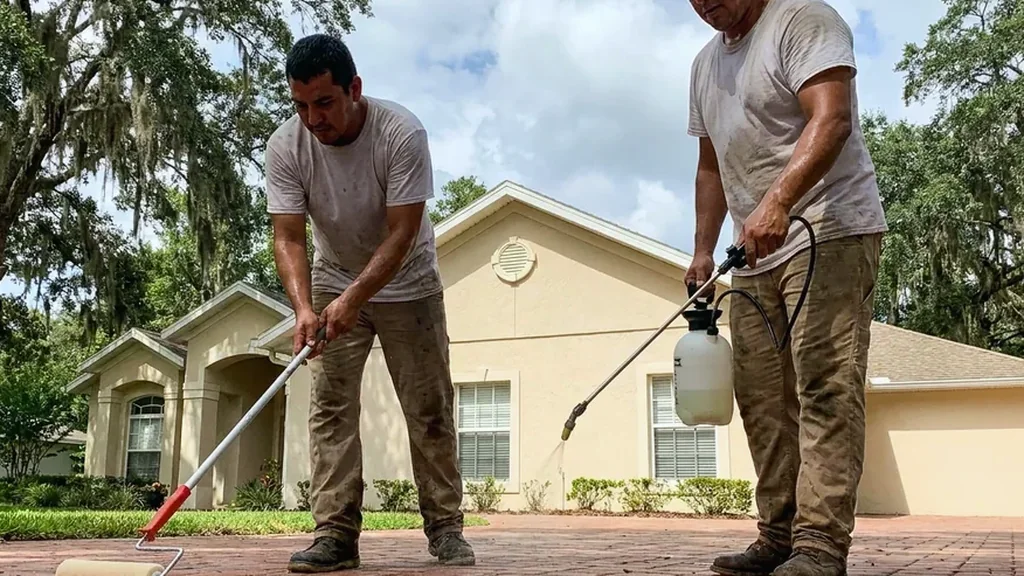
How does a paver sealing job work in Paxon?
Meet at the curb
On a street off Edgewood Avenue North, the visit starts at the curb. The contractor measures the drive and the walk, then checks edges, dips and old stains. A house built near the 1954 median often got its pavers decades later, so the earlier coat is a question mark. A solvent-based coat would rule out a water-based one on top, so bring any receipts and photos. A note about which trees stand near the drive helps too.
Wash the pavers
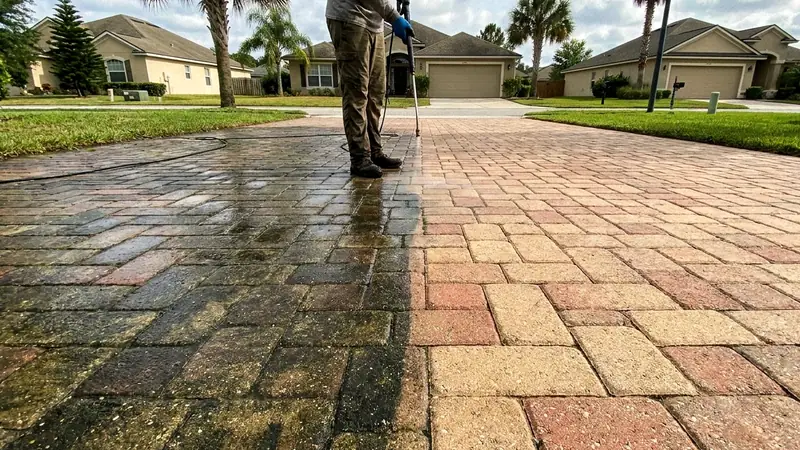
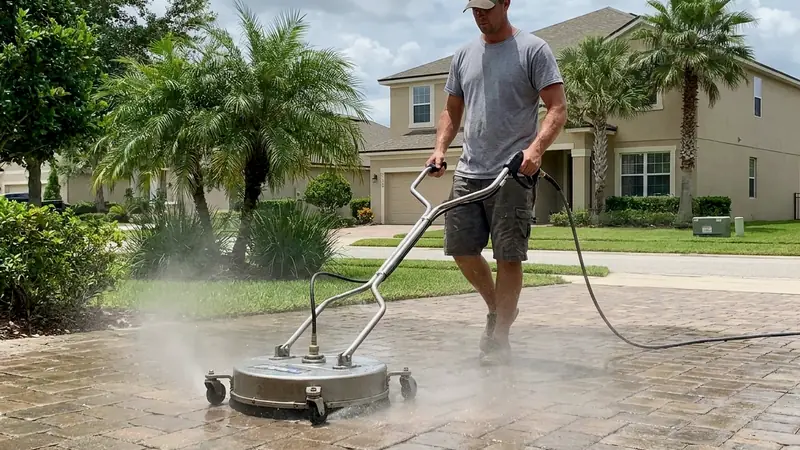
Weeds, dirt, green film and rust marks come off in the wash, with a second pass on stubborn spots. Side walks under mature trees take the longest. Rinse water stays off plants and away from the walls of a mid-century house. The color you see afterward is the starting point for the coat. If weeds are heavy, expect extra time here.
Replace the sand
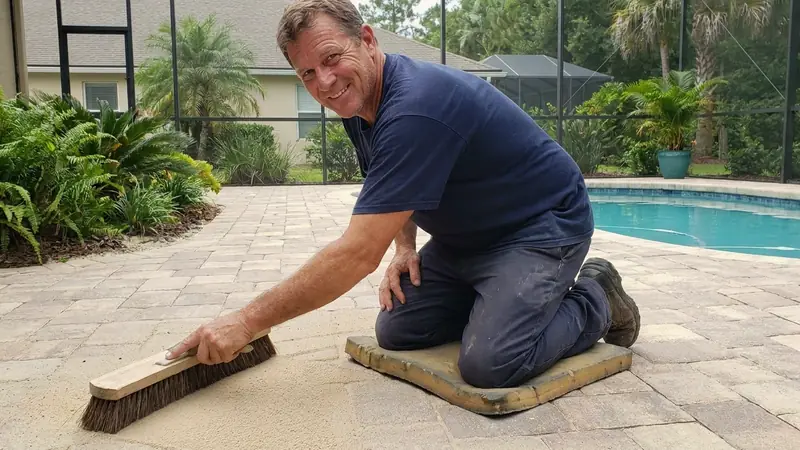
Washing strips the joints. Landscape Ontario links wide joints to lost sand or weak edges, so the contractor checks the edges, brushes in fresh sand and sweeps the surface. If the sand has been low for years, expect this stage to run longer. No grit is left to sit under the coat.
Pick a dry window
Sealer waits for dry pavers, and a Jacksonville company warns that a wet look coat on damp ones can turn cloudy white. Summer rain falls hard and fast, so the contractor watches the forecast and picks several dry days. If a storm rolls through, the start slides. If rain is close, the date slides.
Seal and stay off
The sealer goes on in matte or wet look, as you decided. Wet look shows scuffs sooner, so a drive with daily tires may suit matte. Walking is usually fine within hours, says one Jacksonville company, and cars need about a day, so park on the street until you hear otherwise. Ask for the exact hour that fits your sealer and that week's weather.
Complete paver services in Paxon
Most Paxon jobs are compact. A median home of about 1,152 square feet usually means a short drive, a front walk and maybe a patio, so the whole sequence of wash, sand, dry and seal fits a small footprint. For timing on your house, call (904) 541-9860.
On a mid-century lot the driveway takes tires and street grit, the front walk takes footprints, and a rear patio, if there is one, takes chairs and sun. Name each when you get a free estimate, even a small stoop. Every surface is priced on its own area, and the contractor writes the area down.
Sealers come water-based or solvent-based, matte or wet look. An owner who used a solvent coat years ago closed off water-based sealer on top of it. Matte tends to suit a modest, one-story house, while wet look brings out color and shows scuffs. To compare finishes, call (904) 541-9860.
Jacksonville's 52 inches of rain fall mostly from May to September, often in short bursts, so a wet week can push a start date. Spring and fall are drier. Book with get a free estimate and the contractor will work around the forecast.
Questions to ask before you hire
- Will the sealed pavers turn slick when they get wet around the pool?
- Do you seal the pool coping too, or only the deck around it?
- What can be done about the white powder that keeps rising out of my newer pavers?
- How long should brand new pavers sit before they get their first coat?
- Who will be working at my house on the day of the job?
- Can you lift and reset the pavers that have sunk near my downspouts?
- How do you deal with weeds and ant hills coming up through the joints?
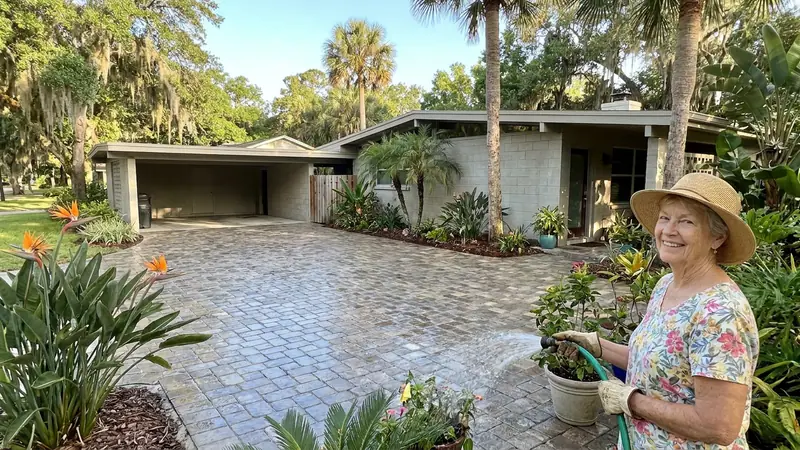
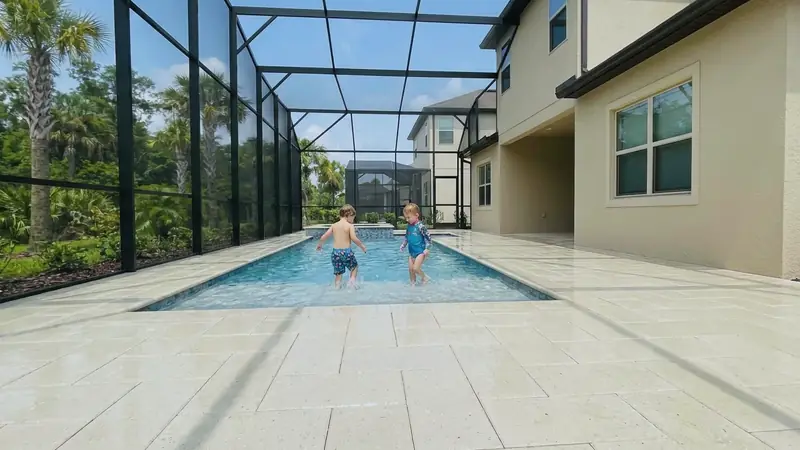
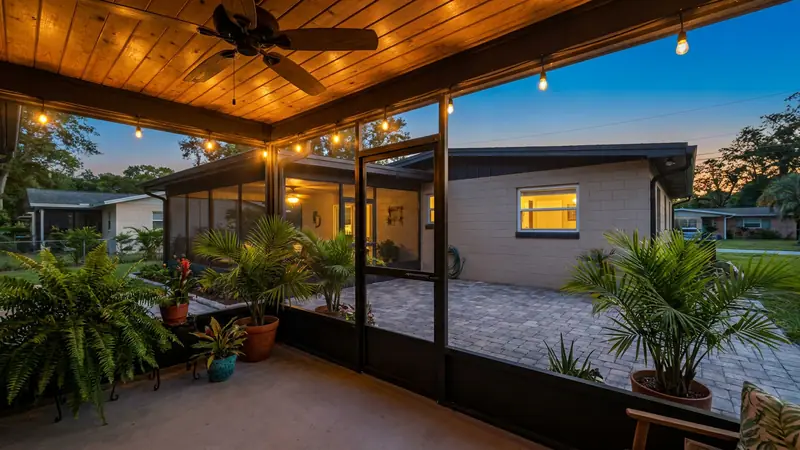
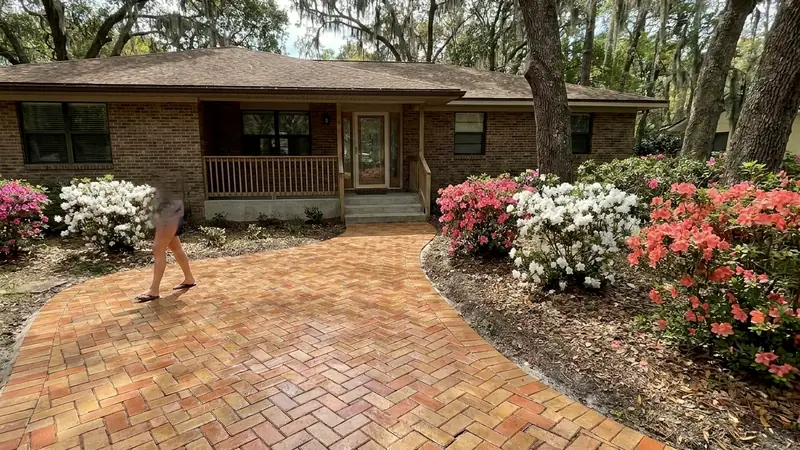
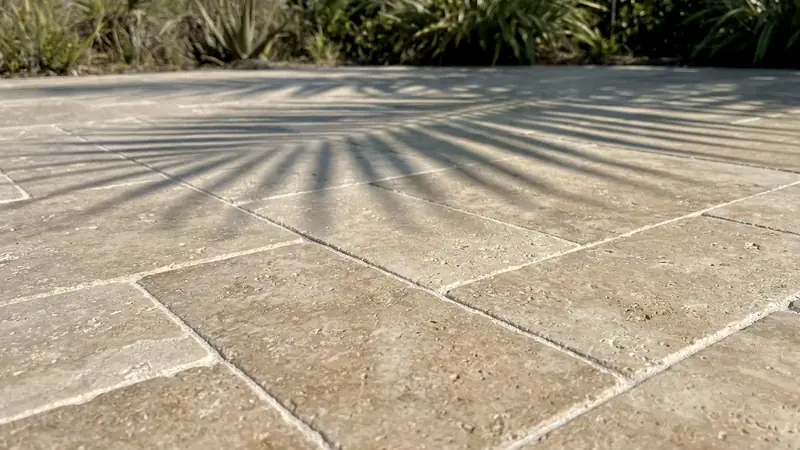
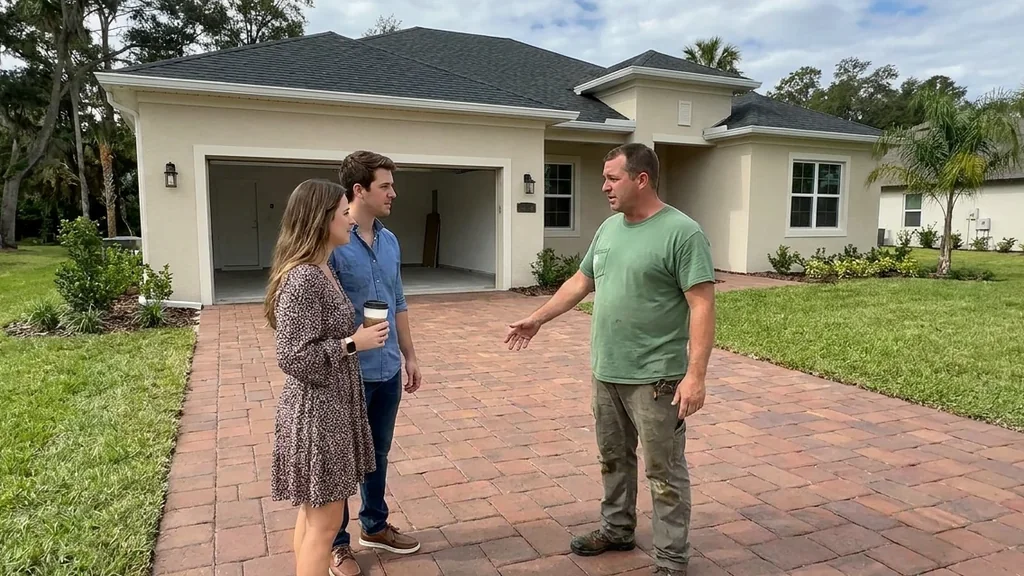
What do sealed pavers look like around Paxon?
Why local matters in Paxon
Someone who works Paxon knows the housing is mostly modest and mid-century, so the jobs are often smaller. Short drives, small patios and walks added years after the house are normal here, since the median home was built in 1954. A contractor used to big new builds may price it wrong. To reach a contractor who serves Paxon, call (904) 541-9860.
Streets matter too. Woodstock Park next door was platted in 1917 with Great Lakes street names, and Edgewood Avenue North is the main corridor through Paxon. A local contractor finds your house quickly and plans the day around the lot, whether it is a one-story mid-century house or an older one. You can get a free estimate and name your street.
Weather is the last piece of the puzzle, and nobody controls it. Summer rain arrives fast and clears fast, and a dry window decides when sealer can go on, so the schedule has to bend. To hear how a rain delay would be handled, get a free estimate.
How did Paxon get its name, and where does it show up around town?
The name traces back to Paxon Field, a grassy airstrip that local pilots began using in 1923 on the city's western edge. It was named for the Paxon family, and the Navy used it for training in World War II before declaring it unneeded in 1947. Bessie Coleman, the first African American internationally licensed pilot, died there in 1926, and a plaque honors her at the school. If your home is near the old field, get a free estimate.
Paxon High School was built on the field in 1954 and became Paxon School for Advanced Studies in 1996, on an 88-acre campus. Hammond Park opened in 1955 as Paxon Park and was renamed for Duval County Commissioner Joseph F. Hammond, while Paxon Shopping Center followed in 1958 on Edgewood Avenue North. Near any of these Paxon landmarks, call (904) 541-9860 and give your street name.
Frequently Asked Questions
Why is paver sealing so expensive in Paxon?
Because the number covers more than sealer: surface prep, joint sand and a dry day. The pricing section above shows the published range. In Paxon, where the median home is about 1,152 square feet, the total area is often modest, and the contractor measures it at the free estimate. Ask what the price covers before you agree.
What is a good water-based paver sealer for Paxon homes?
Ask the contractor for the product name, since the right water-based choice depends on the pavers, the finish and earlier coats. Solvent-based coats rule out water-based ones on top. On a mid-century lot nobody may remember what was used, so write the new name down. Photos of the label help you keep the record.
How long does paver sealing last in Paxon?
Companies commonly quote two to five years between coats, so plan within that span. A drive that gets sun and daily tires may sit near the short end, while a shaded back patio may last longer. Beading water means the coat works, says a Jacksonville company, and water that soaks in means it has run its course. Ask the contractor to check your pavers with that test.
How much does it cost to re-sand and seal pavers in Paxon?
The clean, sand and seal price includes re-sanding, so it is not a separate line. Washing removes joint sand, so fresh sand goes in first. What moves your total is area, weeds, lost sand and old sealer, and the estimate is free. Ask for the area written next to each price.
Will sealing stop weeds in my Paxon pavers?
It helps a lot. Landscape Ontario says weed growth can be limited by stabilizing joint sand with a sealer. Fresh sand and a coat of sealer leave weeds little to hold onto. Pulling weeds without refilling the joints does not last, because open joints invite the next batch. A sealed, full joint is much harder for a seed to take root in.
Do raised or sunken pavers need repair before sealing in Paxon?
Yes. Repairs go first because a coat would hold sunken or lifted sections as they are, a Jacksonville company says. Point out low spots and raised edges at your first visit, and ask about tree roots if a mature tree is close. Repairs can add a day, so ask early. A photo of the dip after rain helps.
Can new sealer go over old sealer on Paxon pavers?
Solvent-based coats and water-based sealer do not stack, so the contractor first works out what the pavers already carry. On a mid-century Paxon lot, paperwork from whoever laid the pavers may name the product. If the history is a blank, a test on the surface settles the question. Receipts from any earlier work are worth bringing to the first visit.
Do Paxon's mid-century homes need special care when pavers are washed?
Rinse water should stay off plants and away from the house wall, which matters on older homes. The contractor also checks edges, weeds and dips, and a median home of about 1,152 square feet means a compact job. Tell the contractor if the house has loose siding or fresh paint. Keep pets and children off until the time is up.
Nearby areas we serve
Ready for a Free Estimate in Paxon?
Call (904) 541-9860 and tell us about your pavers.
Free, no obligation