
Lift rust, oil and leaf marks off your pavers
Paver Stain Removal in Sandalwood, FL
Call (904) 541-9860 for a free estimate to treat the stains on your Sandalwood pavers.
- Brings out deeper paver color
- Fresh joint sand helps lock pavers in place
- Gives weeds less room to grow
- Makes the surface easier to keep clean
- Free estimate, no obligation
Request a Free Estimate
Free, no obligation.
Can the stains on my Sandalwood pavers be removed?
Often yes, and a local contractor treats paver stains across Sandalwood, FL, with a reply within 1 business day, usually much sooner. Rust, oil, leaf marks and food spills each need their own treatment, and the visit is free. To describe your marks, call (904) 541-9860.
A stain you can see is a stain a contractor can usually name, and the name decides the cure. Treat it right and the pavers look even again without being worn down. Picture the walk to your front door with no orange lines across it. To have a contractor identify yours, get a free estimate.
Which stains show up on Sandalwood pavers?
Seven kinds come up again and again. Knowing which one you have saves money, because the wrong product can set a stain deeper. To find out which you have, call (904) 541-9860.
Orange sprinkler rust
Iron in irrigation water leaves orange lines, and UF/IFAS says orange streaks on buildings often come from irrigating with it.
Oil and grease
Driveways collect drips from engines. Western Interlock says oil stains are not permanent.
Leaf and tannin marks
Unilock says leaves left on pavers can leave stains, which is why sweeping matters.
Rust rings
Metal planters and furniture leave rust rings. Unilock suggests moving them in fall.
Food and drink spills
Wine, ketchup and oil marks set fast. Unilock says clean spills promptly.
White patches
Efflorescence is a natural salt deposit on newer pavers, per Western Interlock, not a true stain.
Which Sandalwood-area neighborhoods can book paver stain removal?
A local contractor covers Sandalwood and the places around it, and stain treatment is available in each. Pick your page below for local notes. If your street is missing, call (904) 541-9860.
Where does the orange on my pavers come from?
In Florida the usual answer is the sprinklers. UF/IFAS says most Florida well water is high in iron, which leaves rust deposits on anything it touches. If your yard runs on a well, the stain pattern often follows the spray. To have the pattern read, call (904) 541-9860.
Which sprinkler heads cause it?
The ones that throw water onto paving. The orange lines usually trace the arc of the spray. Tell the contractor where each head sits when you get a free estimate.
Why does more pressure make it worse?
Safe Touch says irrigation rust needs a rust treatment followed by a rinse, and that extra pressure only worsens it. Force can push the stain into the surface. To ask about method, call (904) 541-9860.
Should the water be tested?
UF/IFAS suggests testing the water if iron is suspected and says the County Extension office can advise. Fixing the source keeps the stain from returning. Mention a test result when you get a free estimate.
Is it always a well?
No. Rust can come from metal planters, furniture or soil as well. Unilock suggests moving planters and furniture before fall. To have yours traced, call (904) 541-9860.
How are oil stains lifted from pavers?
Oil needs a product made for it, not water alone. Western Interlock describes a commercial oil extractor followed by a hot rinse, repeated if the mark persists. Safe Touch says oil and rust are treated when water alone will not move them. For an oil check, call (904) 541-9860.
Do old oil stains come out?
Western Interlock says the stain is not permanent, though old ones can take repeat treatments. Fresh drips are easier. Mention how old yours is when you get a free estimate.
Does the garage apron stain worst?
It is where cars park and drip, so yes, it often does. A contractor treats that zone first. To book a look, call (904) 541-9860.
Can heat and moderate pressure remove iron stains?
Western Interlock says iron in the soil can bond with iron oxide in the pavers, which makes the stain hard to remove. For existing stains it recommends a heated pressure washer at 1,500 to 2,000 PSI, held at least 8 inches away. Careful tools matter more than force. To ask about method, call (904) 541-9860.
Why is the distance so important?
Western Interlock sets 8 inches as the minimum for its heated method, and Unilock warns that high pressure dislodges joint sand. Ask what distance the crew uses when you get a free estimate.
Why does heat help?
Western Interlock pairs the heated washer with a cleaner applied first to loosen dirt. The pairing does the work, not raw force. To talk through it, call (904) 541-9860.
Do gray pavers show iron most?
Western Interlock says gray tones such as charcoal show staining most. If yours are gray, mention it when you get a free estimate.
What is the paver stain removal process, step by step?
Stain work follows a short order, and the order protects the pavers. Safe Touch, Unilock and Western Interlock each describe pieces of it. To book a visit, call (904) 541-9860.
1. Identify the stain
A contractor reads the color and pattern and names the cause, whether rust, oil, tannin or salt.
2. Test a small area
Safe Touch advises testing a small area first on painted or sensitive surfaces.
3. Treat with the right product
Rust gets a rust treatment and oil gets an extractor, which is how Safe Touch and Western Interlock describe it.
4. Rinse well
Safe Touch says rust treatment is followed by a rinse, with no extra pressure.
5. Refill joint sand
Western Interlock says washing removes joint sand, so fresh sand goes in once the surface is dry.
6. Seal if you choose
Unilock says sealer helps protect against future staining. A coat goes on only after stains are gone.
Will the stains come back after treatment?
They can if the cause stays. A sprinkler head still aimed at the walk will redraw the orange lines. A rusty planter still sitting on the stone will leave a ring. Fix the source and the surface stays clean longer. To ask about yours, call (904) 541-9860.
What does sealer add?
Unilock says sealer helps protect against future staining and wear. Stallone's Pro Wash says a coat helps stone resist leaves and drink spills. It buys time to wipe, and it does not make pavers stain proof. To compare options, get a free estimate.
What habits keep stains away?
Unilock says to clean spills right away, sweep leaves off regularly and move planters and furniture in fall. Those three habits cost nothing. To go over a routine for your yard, call (904) 541-9860.
Should the sprinklers be adjusted?
Aiming heads off the paving removes the main source of orange lines in many Florida yards. A sprinkler company can adjust them. Mention it when you get a free estimate.
Why not turn up the pressure on a stain?
Force is the wrong tool for most stains. Unilock says high pressure dislodges joint sand and suggests a low setting at about 45 degrees. Safe Touch adds that extra pressure only worsens irrigation rust. Western Interlock keeps surface cleaners under 1,500 PSI. For a gentler plan, call (904) 541-9860.
What gets damaged?
The joint sand goes first, and then the surface can scar. Both are costly to repair compared with the stain. Ask what tools the crew uses when you get a free estimate.
What is the better tool?
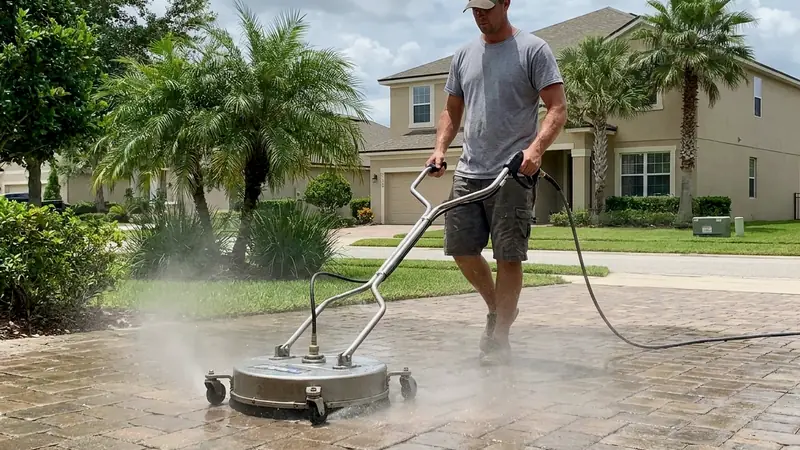
A treatment matched to the stain, then a controlled wash. Western Interlock describes surface cleaners with rotating heads about an inch above the stone. To ask about the tool, call (904) 541-9860.
What does paver stain removal cost in Sandalwood?
Around Jacksonville, Safe Touch lists $1.75 to $3.25 a square foot for the clean, sand and seal sequence. No published Jacksonville page prices spot stain treatment, so it is quoted after a look. For a figure on your own pavers, get a free estimate.
The table shows the whole surface sequence for two common sizes and says plainly where no number exists. Bring any quote you already hold and compare. To talk one through, call (904) 541-9860.
Dealing with something broader? Read about paver restoration and resealing, driveway paver sealing or pool deck paver sealing, or call (904) 541-9860.
| What is priced | Typical example | Published figure |
|---|---|---|
| Whole surface clean, sand and seal | 300 sq ft patio | $525 to $975 |
| Whole surface clean, sand and seal | 600 sq ft driveway | $1,050 to $1,950 |
| Spot treatment of rust or oil | A few marks | No published Jacksonville rate found, quoted after a look |
| Stripping a failed coat | Cloudy or peeling sealer | Costs more than a standard job, per Safe Touch |
The first two rows multiply the $1.75 to $3.25 a square foot that a Jacksonville washing company publishes to clean, sand and seal, read in November 2026. No published Jacksonville page gives a price for spot stain treatment, so the table says so instead of guessing. Ask for stain work as its own line on the quote.
Should I seal pavers after the stains are gone?
Sealing is optional, though Unilock says it helps protect against future staining and wear. A coat goes on only after stains are treated, since sealing over a stain locks it in. Aftermarket sealers are reapplied every 3 to 5 years per Unilock. To compare, call (904) 541-9860.
What finish suits a stained area?
Many owners pick a natural look that keeps the paver texture. Near a pool, footing matters more than shine. Ask to compare finishes when you get a free estimate.
How long before sealing?
Treated pavers must dry fully first, which Safe Touch stresses for every sealing job. A wet surface can trap moisture. To plan the order, call (904) 541-9860.
What should I know about Sandalwood homes and stains?
Zip-codes.com counted 58,105 people in ZIP 32246 in 2020 and lists 26,747 housing units. With that many homes, the stain makers vary from street to street: wells, trees, grills, cars. A contractor has to look at each home. To book a look, call (904) 541-9860.
Is a stain worth fixing at this home value?
The ZIP's 2024 median home value is $312,900. A clean front walk is the first thing visitors and buyers see. To price yours, get a free estimate.
What should I ask before booking stain removal?
A good quote names the stain, the treatment and the aftercare. Use these questions to compare bids. To get answers in writing, call (904) 541-9860.
What is the stain, in your words?
A contractor who names it correctly is more likely to treat it correctly. Ask for the name and the product. Start the question when you get a free estimate.
What pressure and distance will you use?
Western Interlock gives 1,500 PSI for surface cleaners and 1,500 to 2,000 PSI at 8 inches for its heated method. The answer should be close to that. To ask, call (904) 541-9860.
Is joint sand part of the price?
It should be, since washing removes it. Ask it to be listed on the quote. To confirm, get a free estimate.
Will you test a small area first?
Safe Touch advises testing on painted surfaces before treating. A careful company does it as a habit. To ask, call (904) 541-9860.
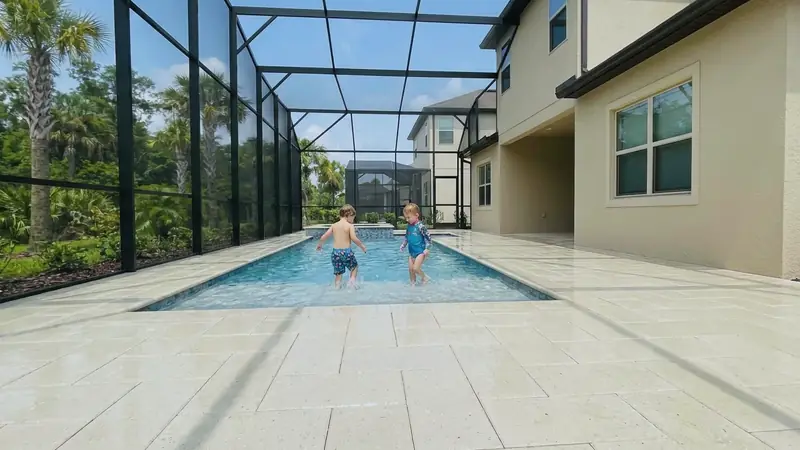
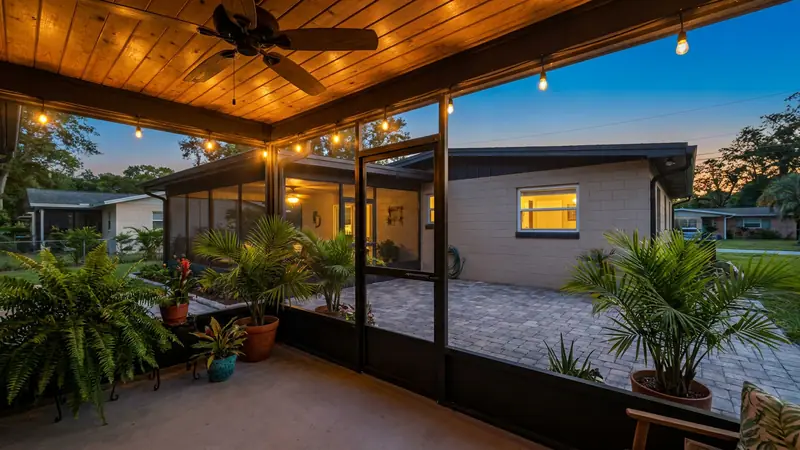
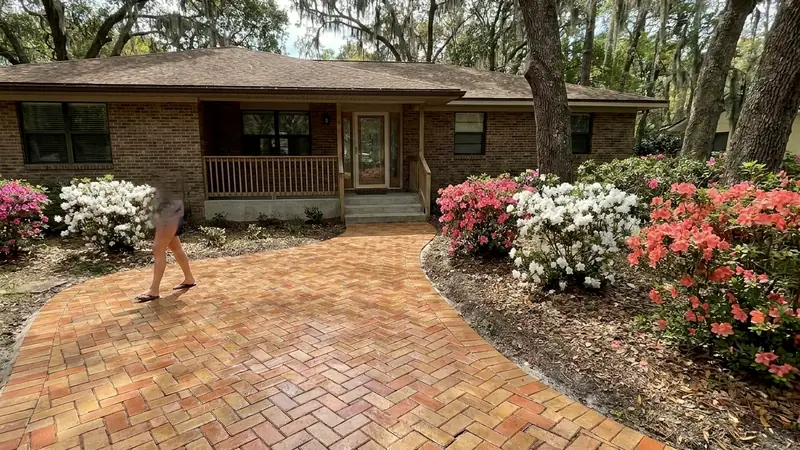
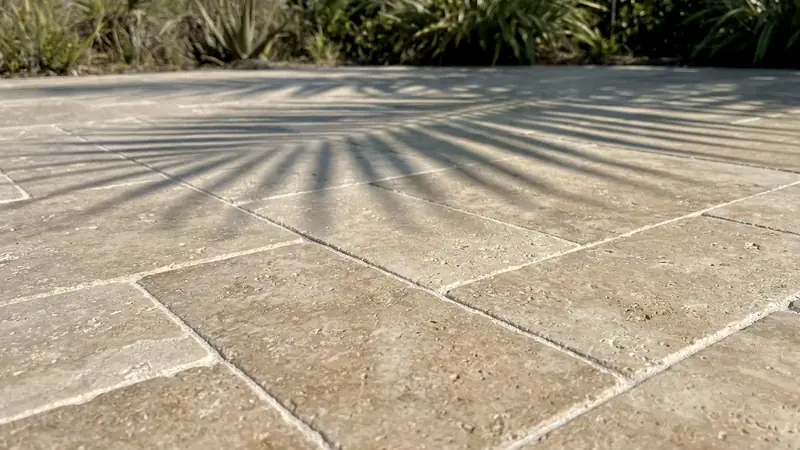
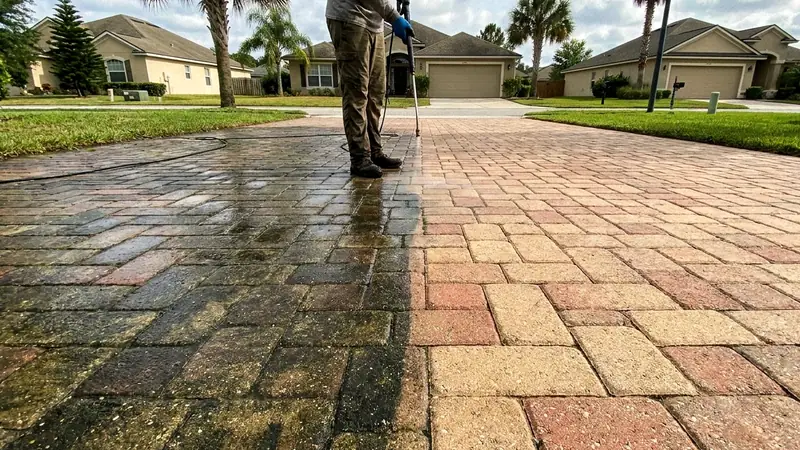
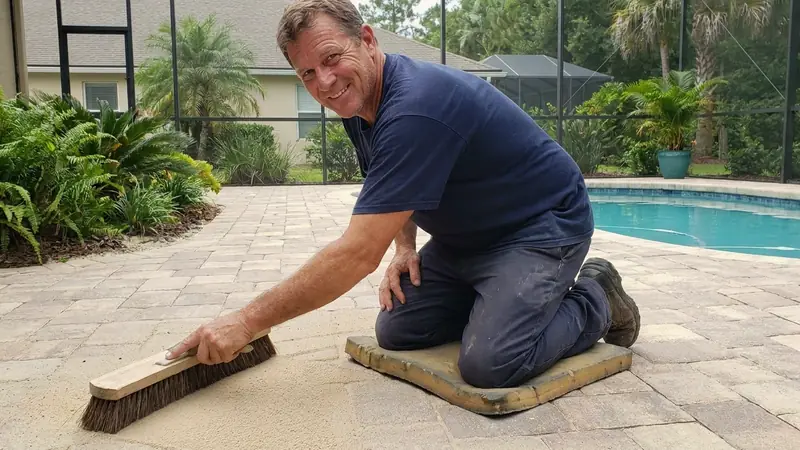
How do pavers look after stain removal in Sandalwood?
Frequently Asked Questions
Can I clean sand and seal my pavers?
Yes, and stain work usually comes first. Safe Touch lists the clean, sand and seal sequence at $1.75 to $3.25 a square foot around Jacksonville, and says oil and rust are treated when water will not move them. Sealing over a stain locks it in, so treatment goes before the coat.
What not to use to clean pavers?
Heavy pressure, for one. Unilock says high pressure dislodges joint sand and suggests a low setting at about 45 degrees. Safe Touch adds that extra pressure only worsens irrigation rust, and Unilock lists magnesium-based de-icers as damaging.
Is there a pressure washing business in Florida?
Yes, many of them, but stain work is different from general washing. A stain needs the right treatment first, and pressure is the last tool. Ask any company what it uses on rust and oil before you book.
How much should I pay for paver sealing?
Start from the published Jacksonville range of $1.75 to $3.25 a square foot to clean, sand and seal. Stain treatment is usually a separate line, and a quote that skips it may leave the marks to be sealed in.
Which sealer is right for Florida pavers?
Ask which product goes on and why. Unilock says sealer helps protect against future staining and that aftermarket sealers are reapplied every 3 to 5 years, while Safe Touch calls 2 to 3 years typical around Jacksonville.
Why do my pavers have orange streaks?
Irrigation is the usual suspect. UF/IFAS says most Florida well water is high in iron and that irrigating with it leaves orange streaks. Safe Touch says irrigation rust needs a rust treatment followed by a rinse.
Can oil stains be removed from pavers?
Often yes. Western Interlock describes a commercial oil extractor followed by a hot rinse, repeated if the mark persists, and says oil stains are not permanent. Fresh spills are easier, which is why Unilock says to clean them promptly.
Will rust stains come back after treatment?
They can if the cause stays. A sprinkler head that keeps hitting the same spot, or a rusty planter left on the stone, restarts the mark. Unilock suggests moving planters and furniture in fall so rust rings do not set over winter.
Do dark pavers hide stains better?
Not always. Western Interlock says gray tones such as charcoal show staining most. Lighter and mid tones have their own weak spots, so color alone does not decide it.
How are white patches different from stains?
White patches are often efflorescence, a salt that rises out of new pavers. Western Interlock calls it natural, and Unilock describes it as a powdery white deposit after installation. A contractor can tell it apart from a stain.
Does sealing prevent stains?
It helps. Unilock says sealer protects against future staining and wear, and Stallone's Pro Wash says a coat helps stone resist leaves and drink spills. It buys time to wipe a spill up, and it does not make pavers stain proof.
Ready to clear the stains off your Sandalwood pavers?
Call or fill in the short form, and a local contractor replies within 1 business day, usually much sooner.
Free, no obligation